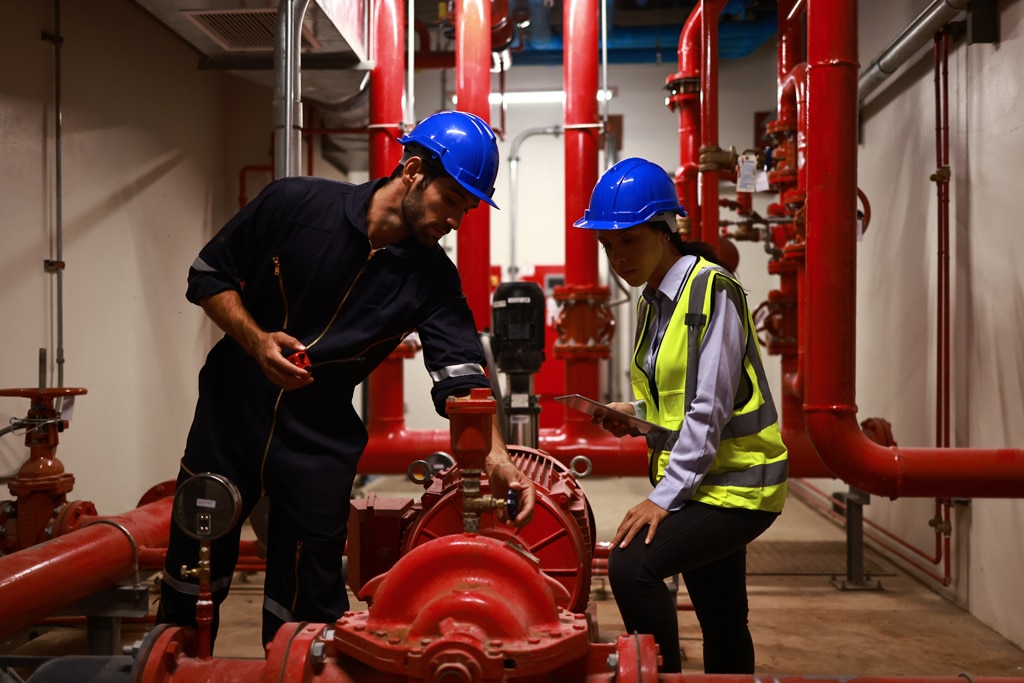
Fire sprinkler servicing explained gives building owners a clear view of what keeps systems reliable, compliant and ready to perform when needed most. Fire sprinkler servicing explained also shows why annual maintenance protects lives, reduces risk and supports legal compliance across UK buildings.
Many people install fire sprinklers and then assume they will work forever without attention. However, that assumption creates serious risk. A sprinkler system only performs correctly when it receives regular inspection, testing and maintenance. Over time, small issues can develop quietly, and those issues can affect performance during a fire.
Annual servicing gives engineers the chance to check every critical component. It also ensures the system meets UK standards such as BS EN 12845 and BS 9251, depending on the building type. More importantly, it gives building owners confidence that their fire protection system will operate exactly as designed.
For our professional support and scheduled maintenance, talk to us anytime.
Why Fire Sprinkler Servicing Matters More Than You Think
Fire sprinkler systems work silently in the background for years. Because of that, many building managers underestimate their maintenance needs.
However, every sprinkler system relies on pressurised water, mechanical valves and heat-sensitive heads. These components can deteriorate over time. Dust, corrosion, accidental damage and water supply issues can all affect system performance.
Regular servicing identifies these risks early. Engineers test water flow, inspect pipework and confirm that all sprinkler heads remain unobstructed. They also check control valves and alarm interfaces to ensure the system responds correctly during activation.
Without annual servicing, small faults can escalate into system failure. That risk increases in older buildings or environments with high dust, heat or humidity levels.
What Happens During Annual Fire Sprinkler Maintenance
A proper fire sprinkler service follows a structured process. Engineers work methodically to confirm every part of the system functions correctly.
Typically, annual maintenance includes:
- Full visual inspection of pipework and sprinkler heads
- Testing of control valves and alarm interfaces
- Water flow testing and pump checks where installed
- Pressure readings and system performance verification
- Inspection of water storage tanks and associated components
Each of these steps plays a vital role in system reliability. Engineers also record findings in a service report, which helps building owners demonstrate compliance during audits or inspections.
In many cases, engineers also highlight small corrective actions before they become serious faults. That proactive approach saves money and reduces long-term repair costs.
Compliance with UK Fire Safety Regulations
UK fire safety law places responsibility on the building owner or responsible person. That duty includes ensuring fire protection systems remain in working order.
Regular servicing helps meet legal obligations under the Regulatory Reform (Fire Safety) Order 2005. It also supports compliance with British Standards such as BS EN 12845 for commercial and industrial systems, and BS 9251 for residential and domestic systems.
Insurance providers often require proof of regular maintenance as well. Without documented servicing, claims may become more complicated after a fire incident.
Annual maintenance therefore protects more than equipment. It supports legal compliance, insurance validity and overall building safety.
Common Issues Found During Servicing
Even well-installed sprinkler systems develop issues over time. Annual servicing often reveals problems that building owners never notice.
Some of the most common findings include:
- Partially blocked sprinkler heads due to dust or paint
- Corroded pipework in older or poorly ventilated areas
- Closed or partially shut control valves
- Low water pressure in supply systems
- Faults in alarm monitoring connections
Engineers resolve many of these issues quickly during scheduled maintenance. However, early detection prevents system failure and reduces repair costs significantly.
In some cases, servicing also highlights design limitations. Engineers may recommend system upgrades or modifications to improve performance or compliance.
How Maintenance Extends System Lifespan
Fire sprinkler systems can last decades when properly maintained. However, neglect shortens their lifespan and increases failure risk.
Regular servicing protects internal components from long-term wear. Engineers flush systems where needed, replace worn seals and ensure moving parts operate smoothly. This keeps the system in optimal condition year after year.
Consistent maintenance also protects water quality within the system. Stagnant or contaminated water can damage pipework and reduce efficiency. Routine checks help prevent that buildup.
Over time, this ongoing care reduces the need for major repairs or full system replacement.
Reducing Risk Through Preventative Care
Fire safety works best when it focuses on prevention rather than reaction. Annual sprinkler servicing follows that principle.
Instead of waiting for faults to appear during an emergency, engineers identify risks early. That approach reduces the chance of system failure when it matters most.
Preventative maintenance also reduces disruption. Planned servicing takes far less time than emergency repairs or system shutdowns after a fault occurs.
For landlords, facilities managers and business owners, that predictability makes long-term building management easier and more cost-effective.
The Role of Testing in System Confidence
Testing forms a core part of every fire sprinkler service. Without testing, no one can confirm how the system will behave under real conditions.
Engineers simulate system activation through controlled procedures. They check flow rates, alarm responses and mechanical operation. These tests confirm that every part of the system reacts correctly.
Importantly, testing also reassures building occupants. Staff, residents and visitors gain confidence knowing the fire protection system remains fully functional.
That confidence matters in care homes, residential blocks, warehouses and commercial buildings where fire risk management plays a critical role in daily operations.
Why Professional Servicing Should Never Be Skipped
Some building owners consider skipping annual servicing to reduce costs. However, that decision often leads to higher long-term expenses.
Without regular maintenance, minor faults go unnoticed. Over time, those faults can escalate into system failure or non-compliance issues.
Non-compliance can also lead to enforcement action, insurance complications or even legal consequences in the event of a fire.
Professional servicing ensures qualified engineers inspect the system correctly. They understand design standards, hydraulic requirements and safety regulations. That expertise protects both property and lives.
Fire Sprinkler Servicing and Long-Term Cost Savings
Although servicing involves scheduled costs, it often reduces overall lifetime expenditure.
Well-maintained systems require fewer emergency repairs. They also last longer before replacement becomes necessary. That reduces capital expenditure over time.
Additionally, insurance premiums may remain more stable when regular servicing is documented. Insurers view maintained systems as lower risk.
Ultimately, planned maintenance costs far less than reactive repairs or system failure recovery.
Building Owner Responsibilities in the UK
UK law places clear responsibility on building owners and duty holders to maintain fire safety systems.
That responsibility includes scheduling inspections, keeping records and acting on engineer recommendations. It also includes ensuring systems remain accessible for testing and maintenance.
Failure to meet these responsibilities can result in enforcement action from fire authorities. More importantly, it can put lives at risk.
Regular servicing provides documented proof that building owners take their responsibilities seriously.
Why Regular Servicing Builds Trust
Fire safety plays a major role in tenant confidence, insurance assessments and regulatory inspections.
When a building demonstrates consistent maintenance, it builds trust with occupants and authorities. People feel safer in well-managed environments.
That trust also benefits landlords and property managers. It supports occupancy rates, protects reputation and reduces operational risk.
In competitive property markets, strong safety management becomes a valuable advantage.
Conclusion: Servicing Protects Performance, People and Property
Fire sprinkler servicing explained shows that maintenance is not an optional extra. It forms a critical part of building safety and legal compliance.
Annual servicing ensures systems remain reliable, efficient and fully compliant with UK standards. It also reduces long-term costs, improves system lifespan and protects lives in real emergencies.
When building owners invest in regular maintenance, they protect more than equipment. They protect people, property and peace of mind.
For professional inspections, repairs and ongoing maintenance support, visit us HERE!