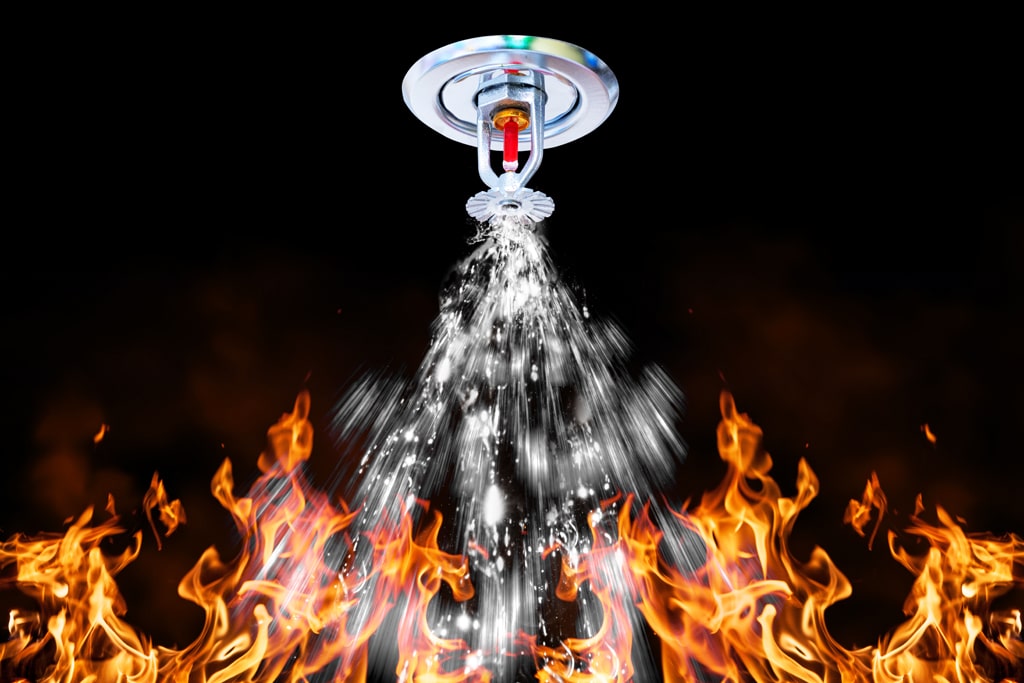
Many building owners ask the same question: do fire sprinklers cause water damage? The concern often appears when businesses or property managers consider installing a suppression system. People imagine ceilings flooding and entire buildings soaking with water. However, the reality looks very different from those assumptions. Modern fire protection systems activate in a precise and controlled way that focuses on stopping fire quickly. Understanding the truth behind the question do fire sprinklers cause water damage helps property owners make better decisions about life safety and building protection.
Misconceptions about sprinklers have circulated for decades. Films and television often show every sprinkler head activating at the same time. Those scenes create the impression that a small fire could flood an entire building. In reality, sprinkler systems work very differently. Each sprinkler head activates individually when heat reaches a specific temperature. This means the system targets the fire directly rather than discharging water across the whole property.
Do fire sprinklers cause water damage compared to fire damage
When people ask do fire sprinklers cause water damage, they rarely compare the damage from fire itself. A growing fire produces extreme heat, heavy smoke, and toxic gases within minutes. Flames also weaken structural elements and destroy furnishings quickly. Without suppression, firefighters often use large volumes of water to control the blaze once they arrive. That response can introduce far more water than a sprinkler system ever releases.
Sprinklers activate early during a fire, often within the first minute of heat escalation. Early activation dramatically reduces fire growth and limits the spread of smoke. Because the fire remains small, only one or two sprinkler heads normally operate. Each head releases a controlled flow of water directly onto the fire source. As a result, the system suppresses flames before they can spread through multiple rooms or floors.
Water damage from a small sprinkler discharge usually remains limited to the immediate fire area. Carpets, furniture, and equipment near the fire may get wet, but the overall building remains largely protected. In contrast, an uncontrolled fire can destroy entire sections of a property. Smoke contamination also travels far beyond the fire location and can affect large areas. When viewed in this context, the question do fire sprinklers cause water damage becomes much clearer. The small amount of water released often prevents far greater destruction.
How modern sprinkler systems control water discharge
Modern sprinkler design focuses on precision and efficiency. Engineers carefully calculate water flow to ensure effective fire suppression without excessive discharge. Each sprinkler head contains a heat-sensitive element that reacts only when the surrounding temperature rises sharply. Once heat reaches the activation threshold, that individual head opens and releases water. Nearby sprinklers remain closed unless heat spreads further.
This targeted response forms one of the most important advantages of sprinkler systems. Instead of flooding a building, the system delivers water exactly where the fire develops. The process keeps water usage low while still controlling the flames effectively. Building owners therefore receive both fire suppression and damage limitation at the same time. That balance explains why modern suppression systems remain a critical safety feature in commercial buildings across the UK.
Firefighters also benefit when sprinkler systems activate early. Controlled fires produce lower temperatures and less smoke before emergency services arrive. Crews can therefore complete final extinguishing work quickly with minimal additional water. This reduces overall damage and speeds up recovery for building occupants. The sprinkler system effectively performs the first stage of firefighting before responders reach the site.
The myths that cause confusion about sprinkler water damage
Many myths continue to influence public perception about sprinkler systems. Media portrayals frequently show dramatic scenes where every sprinkler activates simultaneously. These depictions create the idea that minor incidents can cause widespread flooding. However, sprinkler engineering does not work that way. Systems operate through individual heat detection rather than smoke triggers or manual switches.
Another myth suggests accidental activation happens regularly. Some people believe that small impacts, cigarette smoke, or steam could trigger a sprinkler head. In reality, activation requires significant heat at the ceiling level. The glass bulb or fusible element inside each head remains stable under normal environmental conditions. Only genuine fire temperatures cause it to release water.
Maintenance also plays a key role in preventing unwanted discharge. Professional installers follow strict design standards to ensure reliability and safety. Regular inspection and servicing keep systems functioning correctly over time. Properly maintained sprinklers therefore remain one of the most dependable fire safety measures available. When property owners understand these facts, concerns about accidental flooding quickly disappear.
Fire sprinklers protect buildings and reduce overall damage
Fire protection always aims to limit loss rather than eliminate every form of impact. A fire incident will always cause some disruption, even when suppression systems respond quickly. However, sprinklers dramatically reduce the scale of that disruption. They control heat, contain flames, and prevent fires from spreading through a building. This rapid control protects lives and preserves property at the same time.
Insurance studies consistently show that sprinkler-protected buildings experience far lower losses during fire incidents. The early response prevents structural collapse and reduces the need for extensive rebuilding. Businesses also resume operations sooner because damage remains contained. These outcomes provide strong evidence that sprinkler systems reduce overall risk rather than create new problems.
Property owners therefore benefit from understanding the real answer to the question do fire sprinklers cause water damage. Yes, water discharge occurs when a fire activates the system. However, that water normally represents a small and controlled response to a potentially catastrophic situation. The alternative often involves uncontrolled fire growth followed by large-scale firefighting operations.
Why sprinkler systems remain essential in modern fire safety
Fire safety regulations across the UK increasingly recognise the value of active suppression systems. Many modern buildings now include sprinklers as part of their core fire protection strategy. Care homes, residential developments, warehouses, and commercial premises all benefit from this technology. These systems provide immediate response before occupants even detect the fire.
Sprinklers also support safer evacuation by reducing smoke and heat levels inside a building. Occupants gain valuable time to leave the premises calmly. Emergency services can then manage the situation with far lower risk. This combination of life safety and property protection explains why sprinkler installation continues to expand across the UK.
The debate around do fire sprinklers cause water damage often disappears once people understand how these systems operate. Targeted activation, controlled water flow, and early fire suppression all work together to minimise damage. Rather than flooding a property, the system stops fires while they remain small and manageable. This approach protects lives, limits destruction, and allows buildings to recover far more quickly after an incident.