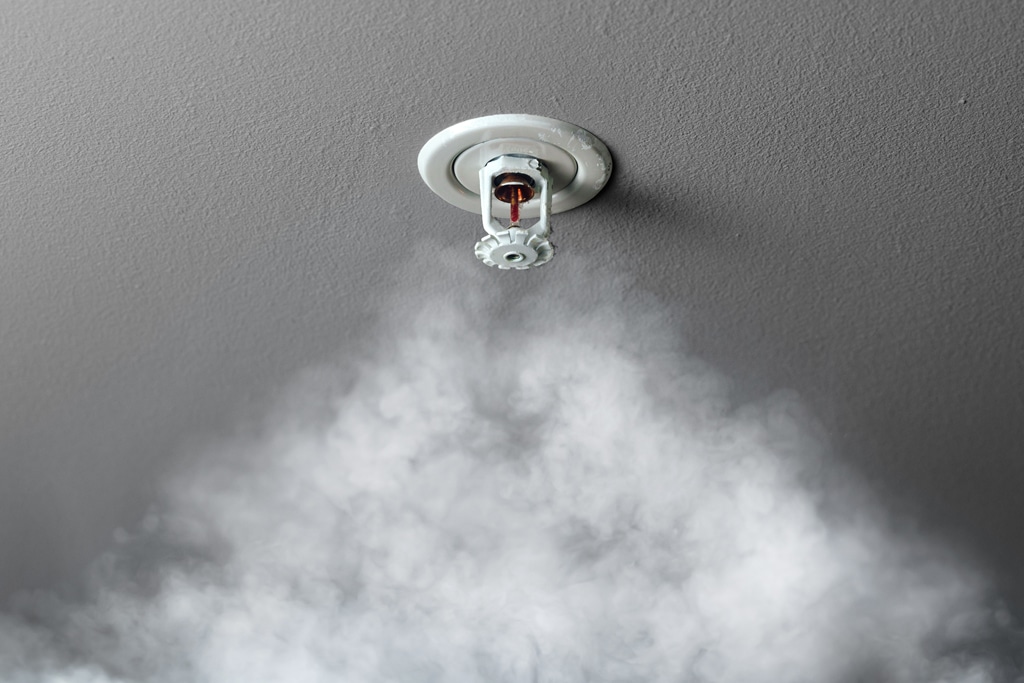
Domestic fire sprinkler systems are becoming a serious consideration for UK homeowners. While smoke alarms alert occupants to danger, sprinklers actively control fire at its source. For many people, however, the detail behind how these systems work remains unclear. As a result, uncertainty often delays decisions.
This complete guide explains them in plain terms. It covers how they work, where they are used, and what homeowners should understand before installation.
What domestic fire sprinkler systems are designed to do
Domestic fire sprinkler systems respond to heat generated by a fire. Each sprinkler head contains a heat-sensitive element. When temperatures reach a specific point, that element activates and releases water.
Importantly, only the sprinkler closest to the fire operates. The system does not respond to smoke. It also does not release water across the entire property. This targeted response controls fire growth early and limits smoke production.
Because sprinklers act quickly, they often reduce damage compared to fires controlled solely by the fire service. Early intervention protects escape routes and improves safety for occupants.
How domestic fire sprinklers differ from smoke alarms
Smoke alarms provide warning. Sprinklers provide action. While alarms rely on people responding correctly, sprinklers respond automatically. This distinction matters in situations where occupants sleep, panic, or struggle to evacuate.
In domestic settings, sprinklers complement alarms rather than replace them. Together, both systems create layered protection. One alerts occupants. The other controls the fire.
Where domestic fire sprinkler systems are commonly installed
Homeowners most often consider domestic fire sprinkler systems during new builds, extensions, loft conversions, or major refurbishments. These projects provide easier access for pipework and reduce disruption.
However, retrofitting also remains possible in many existing homes. Installers assess access routes, ceiling voids, and water supply during the survey stage. Each property receives a tailored solution rather than a standard layout.
Understanding water use and common concerns
Water damage remains a common concern among homeowners. They do not flood homes. Each sprinkler releases water only when exposed to sufficient heat.
In practice, a single sprinkler head often controls a fire using far less water than a fire service hose. As a result, total water damage may be lower than many people expect.
Clear explanation at an early stage helps homeowners feel more confident about system behaviour.
Water supply options for domestic fire sprinklers
Domestic fire sprinkler systems rely on a suitable water supply. Some properties use a direct mains-fed system. Others require stored water supported by a pump.
The survey stage determines which option suits the property. Installers measure flow rate and pressure to confirm performance. Where mains supply proves insufficient, designers specify an alternative arrangement.
This assessment ensures the system performs reliably during a fire.
How domestic fire sprinkler systems are installed
Installation approach depends on property type and project stage. New builds allow straightforward pipe routing. Existing homes require careful planning to limit disruption.
Installers usually work in stages. Pipework installation comes first. Sprinkler heads and control components follow later. Clear communication helps homeowners understand timelines and access requirements.
Careful sequencing keeps disruption manageable.
Testing, commissioning, and sign-off
After installation, testing and commissioning confirm correct operation. Installers check flow rates, pressure, valves, and system controls. Visual inspections confirm correct sprinkler placement.
Commissioning verifies performance before final sign-off. Homeowners receive documentation showing system layout and specifications. These records support building control and future property sales.
Maintenance expectations for homeowners
Domestic fire sprinkler systems require minimal maintenance. Visual checks and occasional servicing support long-term reliability. Installers explain basic responsibilities during handover.
Clear guidance ensures homeowners understand how to keep systems operational without complexity.
How domestic fire sprinklers fit into UK home safety
Domestic fire sprinkler systems form part of a wider safety approach. Smoke alarms, escape planning, and fire-resistant materials all contribute. Sprinklers add automatic protection that does not depend on occupant response.
For homeowners seeking clarity, understanding each element helps support informed decisions.
Further detail on professionally designed systems is available through Nationwide Sprinklers’ residential services page:
https://nationwidesprinklers.co.uk/domestic-and-residential-sprinkler-systems/
Independent guidance on home fire safety, including sprinkler use, is available from the UK government:
https://www.gov.uk/fire-safety-home