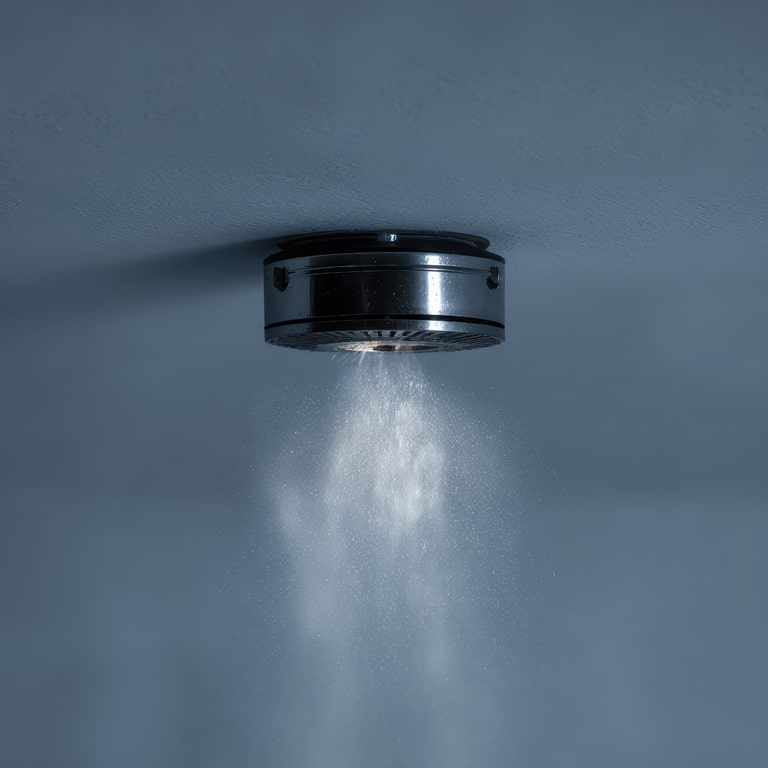
Fire sprinklers vs smoke alarms is a topic many property owners misunderstand. Both systems protect people from fire. However, they perform very different roles during an emergency. Smoke alarms detect danger and warn occupants. Fire sprinklers actively control or suppress the fire itself.
Many buildings across the UK rely only on detection systems. Yet alarms alone cannot stop flames spreading through a room. A warning helps people escape. It does not control heat, smoke or structural damage. That difference explains why fire engineers strongly recommend automatic suppression in higher-risk environments.
Modern buildings increasingly combine both technologies. Detection systems alert occupants early. Sprinklers then control the fire in its earliest stages. Together they create the strongest possible fire protection strategy.
Understanding the difference between these systems helps building owners make better safety decisions.
How Smoke Alarms Detect Fire
Smoke alarms work by sensing particles created during combustion. These devices constantly monitor the surrounding air. When smoke reaches the sensor chamber, the alarm activates and produces a loud warning.
Most UK buildings use optical smoke detectors. These units contain a light source and sensor inside a small chamber. Smoke entering the chamber scatters the light beam. The sensor detects this change and triggers the alarm. Detection systems connect to building alarm panels in many commercial environments. When activated, the system alerts occupants throughout the building. Emergency lighting and evacuation procedures then guide people to safety.
Smoke alarms provide an essential early warning. They dramatically increase survival rates during house fires. However, they cannot reduce the size or intensity of the fire. Flames can continue spreading even after alarms activate.
The Role of Fire Sprinklers in Fire Protection
Fire sprinklers perform a completely different function. Instead of simply detecting danger, sprinklers actively control the fire.
Each sprinkler head contains a heat-sensitive element. This element reacts when temperatures rise above a specific level. Once the heat reaches that threshold, the sprinkler head opens automatically. Water then flows directly onto the fire.
Unlike what many films suggest, only the sprinkler closest to the heat activates. That targeted response controls the fire quickly while minimising water use. Early suppression keeps flames from spreading to other areas. As a result, property damage reduces dramatically and escape routes remain clearer.
Why Detection Alone Cannot Control a Fire
Many property owners believe smoke alarms provide enough protection. Unfortunately, detection systems alone cannot prevent fire growth.
Fire develops extremely quickly in modern buildings. Synthetic materials produce higher heat levels and faster flame spread than older natural materials. Once flames grow beyond the early stage, suppression becomes far more difficult. Smoke alarms provide warning within seconds. However, the fire may already be growing rapidly inside the room.
Without automatic suppression, flames continue feeding on available materials. Heat intensifies and smoke spreads through corridors and stairwells. In many situations, fire crews may arrive after the fire has already caused severe damage.
Sprinklers change that outcome dramatically. By controlling flames early, they slow fire growth and limit heat production. That difference often determines whether a building suffers minor damage or catastrophic loss.
Fire Development in the First Few Minutes
The first few minutes of a fire are critical. During this period the fire moves through several stages.
A small ignition begins when a heat source contacts combustible materials. The fire then enters the growth phase as flames spread across nearby surfaces. Heat builds rapidly inside the room. Smoke begins filling the ceiling space while temperatures rise dramatically.
Without suppression, the fire may reach flashover within minutes. Flashover occurs when nearly all combustible materials ignite simultaneously. At this stage, survival inside the room becomes extremely unlikely. Smoke alarms will warn occupants early in the process. Yet they cannot stop the fire from reaching flashover.
Fire sprinklers intervene before this stage develops. The water spray cools burning materials and surrounding gases. Lower temperatures prevent the fire from reaching extreme intensity.
Why Modern Fire Safety Uses Both Systems
The strongest fire protection strategy combines early detection with automatic suppression. Each system performs a specific role.
Detection alerts occupants and building managers immediately. Sprinklers control the fire before it grows beyond manageable levels. Together they create multiple layers of protection. This layered approach protects life first. Occupants receive early warning and can evacuate safely. Meanwhile sprinklers limit heat and smoke, keeping escape routes clearer.
Property protection improves as well. Fires controlled in their early stages cause far less structural damage. Many UK fire engineers recommend this combined strategy for residential developments, care homes, warehouses and high-risk buildings.
Common Myths About Fire Sprinklers
Despite decades of proven performance, several myths still surround sprinkler systems. These misconceptions often prevent building owners from installing effective protection.
Some people believe sprinklers activate accidentally and flood buildings. Others think every sprinkler head operates simultaneously. Films and television programmes often reinforce these incorrect ideas.
In reality, sprinkler systems operate with remarkable precision. Only heads exposed to high heat activate. Accidental discharge remains extremely rare in properly maintained systems.
Another common myth suggests water damage from sprinklers exceeds fire damage. In practice, sprinklers usually release far less water than fire service hoses.
A single sprinkler head discharges around 60 litres of water per minute. Fire hoses can deliver several hundred litres in the same time.
Early suppression therefore reduces both fire damage and water damage.
Fire Safety Law and Risk Assessment in the UK
UK fire safety law places responsibility on building owners and managers to manage fire risks effectively.
The Regulatory Reform (Fire Safety) Order 2005 requires responsible persons to conduct fire risk assessments. These assessments must evaluate detection systems, evacuation procedures and suppression measures.
Some buildings require additional protection due to their occupancy or design. Care homes, residential high-rises and certain commercial premises often benefit from sprinkler installations.
Building regulations also encourage sprinkler use in specific situations. For example, many tall residential buildings now include sprinkler systems to improve life safety.
Fire engineers assess each building individually to determine appropriate protection.
Situations Where Smoke Alarms Alone May Not Be Enough
Smoke alarms provide vital warning in many properties. However, certain environments face greater fire risks.
Buildings with vulnerable occupants require stronger protection. Residents may struggle to evacuate quickly during emergencies. Other properties contain high fuel loads or complex layouts. These factors allow fires to grow rapidly before firefighters arrive.
Examples include:
- Care homes and supported living environments
- Warehouses storing combustible goods
- Large residential developments
- Student accommodation buildings
- Hotels and large guest properties
These buildings often benefit significantly from sprinkler protection. Early suppression protects occupants while reducing structural damage. Fire engineers frequently recommend automatic systems in these environments.
Why Sprinklers Provide Proven Life Safety
Statistics consistently demonstrate the effectiveness of fire sprinklers. Fires in sprinkler-protected buildings rarely grow beyond the room of origin.
Most sprinkler activations involve only one or two heads. These heads control the fire before it spreads throughout the building. As a result, occupants experience lower exposure to heat and smoke.
Firefighters also face safer conditions when arriving on site. Controlled fires reduce structural collapse risks and improve visibility. Insurance providers recognise these benefits as well. Many insurers offer reduced premiums for buildings protected by sprinkler systems.
Those reductions reflect the significantly lower risk of large fire losses.
A Smarter Approach to Fire Protection
The debate around fire sprinklers vs smoke alarms should not focus on choosing one system over the other. Both technologies play essential roles in fire safety.
Smoke alarms provide the crucial early warning needed for evacuation. Sprinklers then intervene to control the fire itself. When used together, these systems deliver a powerful combination of detection and suppression.
Modern fire safety strategies increasingly adopt this layered approach. Buildings that combine alarms and sprinklers achieve higher levels of protection for both people and property.
Conclusion
Fire sprinklers vs smoke alarms highlights a fundamental truth in fire safety. Detection alone cannot stop a fire from growing.
Smoke alarms warn occupants and allow evacuation. Yet they cannot reduce heat, flames or smoke production. Without suppression, fires continue spreading rapidly. Fire sprinklers change that outcome by controlling fires in their earliest stages. Early suppression limits damage, protects escape routes and improves survival chances.
The most effective fire protection combines both systems. Detection alerts occupants immediately. Sprinklers then control the fire before it escalates. That layered protection strategy protects lives, buildings and businesses across the UK.
For many modern buildings, relying on alarms alone simply does not provide enough protection.