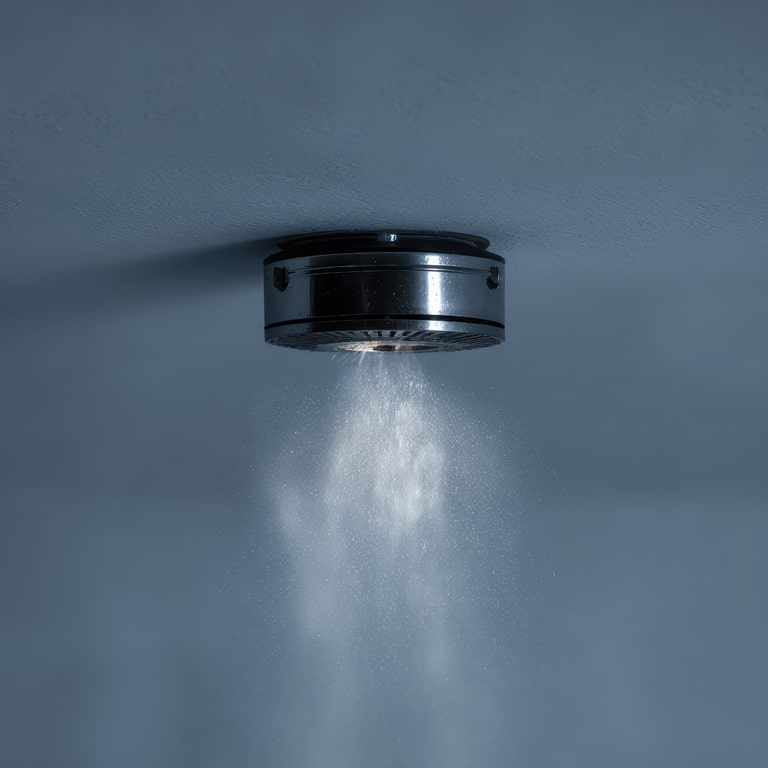
People often imagine a fire sprinkler turning a room into a swimming pool. That dramatic picture makes for good television, but it does not reflect reality. So, how much water do fire sprinklers use when a fire starts inside a real UK property? In most cases, far less than people expect. A correctly designed sprinkler system releases water only where heat activates an individual sprinkler head. Therefore, the system targets the fire rather than flooding the entire building. This simple fact makes sprinklers one of the most misunderstood tools in modern fire safety.
The myth usually comes from films and television programmes. There, one sprinkler activates and suddenly every sprinkler head starts spraying at once. Real fire sprinkler systems do not work like that. Instead, each sprinkler head responds independently to the heat around it. Consequently, a small fire may activate only one sprinkler head. A larger fire may activate several heads, but the system still focuses water where the fire needs control. This targeted approach helps limit both fire growth and unnecessary water use.
Understanding how much water do fire sprinklers use also means looking at the purpose behind the system. Sprinklers do not simply spray water randomly around a building. Designers calculate the required water supply according to the building, its use and the relevant UK standards. Furthermore, installers select sprinkler heads and pipework to suit the risks within each protected area. The system then delivers water where it can control the fire most effectively. As a result, sprinkler water usage depends on the design rather than a single fixed figure for every property.
How Much Water Do Fire Sprinklers Use During a Fire?
The answer depends on several important factors. For example, a domestic sprinkler system may use a different flow rate from a system protecting a large commercial building. The fire risk also affects the design and the required water supply. Similarly, the size and type of sprinkler head can influence the amount of water discharged. Therefore, nobody can give one figure that applies to every sprinkler system. However, the important point remains the same: sprinklers use water strategically rather than indiscriminately.
A sprinkler head activates when heat reaches its operating temperature. Once that happens, the head releases water onto the area below. Meanwhile, the remaining sprinkler heads stay closed unless heat activates them too. This design prevents the widespread discharge that many people associate with sprinkler systems. In fact, a small fire may only require one activated sprinkler head to control it. Therefore, the system can often use a relatively modest amount of water compared with the potential damage caused by an uncontrolled fire.
The exact flow rate varies according to the system design and sprinkler classification. For domestic and residential applications, designers may calculate water demand using the relevant requirements of BS 9251. Commercial and residential systems may also follow other standards, depending on the building and its risk profile. Consequently, professional designers must assess the property before selecting the system. They consider factors such as occupancy, building layout, fire load and available water supplies. This careful process ensures the system provides suitable protection for the specific building.
Why Do People Think Sprinklers Use Huge Amounts of Water?
Much of the confusion comes from a misunderstanding of how sprinkler systems operate. People often picture every sprinkler head activating as soon as one detects a fire. However, sprinkler heads do not respond to smoke in the same way as smoke alarms. Instead, heat triggers the sprinkler head when the surrounding temperature reaches its activation point. As a result, a fire in one room does not automatically activate every sprinkler throughout the property.
Television has also created some unrealistic expectations. Films often show dramatic scenes where water pours from every ceiling sprinkler at once. While that makes an exciting scene, it does not accurately represent normal sprinkler operation. In reality, heat activates individual sprinkler heads close to the developing fire. Furthermore, the system aims to control the fire before it spreads throughout the building. Therefore, the amount of water released can remain far lower than people expect.
Another common misconception involves water damage. Certainly, water can cause damage if it reaches sensitive materials or equipment. However, an uncontrolled fire can cause significantly greater destruction within minutes. Fire produces heat, smoke and toxic gases, while flames can rapidly damage structural elements and contents. Meanwhile, firefighters may need to use substantial quantities of water once a fire has grown. Therefore, comparing sprinkler water usage with the potential consequences of an uncontrolled fire gives a more realistic picture.
Fire Sprinklers Use Water to Control Fire Quickly
Speed plays a crucial role in reducing the amount of water a fire needs. A sprinkler system can respond while a fire remains relatively small. By controlling the flames early, the sprinkler can prevent the fire from developing into a much larger incident. Consequently, the system may need less water than firefighters would require after the fire spreads. This early intervention also helps protect escape routes and gives occupants more time to leave safely.
A fire can change dramatically within a short period. Once flames spread to additional materials, the fire can grow much faster. Heat levels can rise, smoke can spread and conditions can become dangerous. Therefore, controlling the fire early offers major benefits for both life safety and property protection. Sprinklers provide this early response by delivering water directly onto the developing fire.
The location of the sprinkler also matters. Designers position sprinkler heads to provide suitable coverage throughout the protected area. They account for ceiling heights, room layouts and potential obstructions during the design process. As a result, water reaches the areas where the system needs to control fire development. Professional installation then ensures the system performs according to its intended design.
Do All Fire Sprinklers Activate at Once?
No, and this remains one of the biggest myths surrounding fire sprinkler systems. Each sprinkler head operates independently from the others. Therefore, heat must reach each individual sprinkler head before it activates. A fire in a single room may only activate the sprinkler heads affected by the heat. Meanwhile, sprinkler heads in other rooms normally remain closed.
This independent operation helps reduce unnecessary water discharge. For example, a small fire in a kitchen does not normally activate sprinklers throughout an entire home. Instead, the sprinkler closest to the fire responds when sufficient heat reaches it. If that sprinkler controls the fire, other heads may never activate. Consequently, the system can contain the incident while using only the water needed for the situation.
However, larger fires may activate multiple sprinkler heads. That does not mean the system has failed. Instead, several activated sprinklers can indicate that the fire has spread across a larger area. Even then, each sprinkler head still operates according to its individual activation conditions. Therefore, the system continues to target the fire rather than simply releasing water everywhere.
How Sprinkler Design Affects Water Usage
Professional sprinkler design plays a major role in controlling water demand. A competent designer assesses the building before creating the system layout. They consider the property’s use, occupancy and potential fire hazards. Furthermore, they select suitable sprinkler heads and calculate the required water supply. This process helps ensure the system provides effective protection without relying on unnecessary water discharge.
UK fire sprinkler standards also help guide system design. Depending on the application, designers may work with standards such as BS 9251 for residential and domestic sprinkler systems. Other buildings may require different standards or design approaches. Therefore, property owners should always seek advice from a competent sprinkler designer. The correct system must match the building rather than follow a generic approach.
Water storage and supply arrangements also influence system performance. Designers must ensure the system has an adequate water supply for the required protection period. The precise requirements depend on the relevant standard and the building’s risk classification. Consequently, the water tank size does not simply reflect how much water the sprinklers will spray during every fire. Instead, it supports the system’s designed performance under specified conditions.
Do Fire Sprinklers Cause More Damage Than Fire?
This question often worries property owners, particularly those protecting homes, care environments and commercial premises. However, the comparison should focus on the likely outcome of an uncontrolled fire. Fire can spread rapidly through rooms, damage contents and compromise building structures. Smoke can also travel far beyond the room where the fire begins. Therefore, early sprinkler intervention can significantly reduce the overall scale of damage.
Water damage remains a consideration, of course. However, sprinkler systems deliver water directly towards the area affected by the fire. They do not normally discharge from every sprinkler head throughout the property. Furthermore, early fire control can reduce the need for extensive firefighting operations. As a result, sprinklers can help limit the combined impact of fire, smoke and firefighting water.
Property owners should also remember that firefighters may need to use much more water once a fire develops. Fire engines carry significant water supplies, while crews may use hoses to tackle established fires. By that stage, flames may have already spread through several rooms or areas. Sprinklers aim to intervene much earlier. Therefore, the question should not simply ask how much water sprinklers use, but how much damage they can prevent.
The Real Benefit Comes From Early Fire Control
Ultimately, fire sprinklers work by controlling fires before they become much larger incidents. Their greatest value does not come from using large quantities of water. Instead, their strength comes from delivering the right amount of water to the right location at the right time. This targeted response can slow or control fire growth during the crucial early stages. Consequently, sprinklers can protect people, reduce property damage and support safer evacuation.
Moreover, sprinkler systems can provide valuable protection in many different UK buildings. Homes, care environments, commercial premises and other properties can all face different fire risks. Each application requires an appropriate design that reflects its specific circumstances. Therefore, property owners should never rely on assumptions about sprinkler water usage. Professional assessment provides a far more accurate picture.
Nationwide Sprinklers can help property owners understand the options available for their buildings. Our team can assess the requirements and recommend suitable fire sprinkler solutions. We understand the importance of designing systems that meet the relevant UK standards and building requirements. Furthermore, we recognise that every property presents different challenges. You can explore our fire sprinkler systems to learn more about how sprinkler protection works.
Why Choosing the Right Sprinkler System Matters
A well-designed sprinkler system provides more than simple fire protection. It forms part of a wider approach to managing fire risk within a building. Therefore, designers must consider how the system interacts with other fire safety measures. These measures can include detection, alarms, compartmentation and safe escape routes. Together, these features create a stronger strategy for protecting people and property.
Importantly, sprinkler systems do not replace other essential fire safety measures. Instead, they complement them. Smoke alarms can provide early warning, while sprinklers can act directly against developing flames. Fire doors can help restrict fire and smoke movement, while compartmentation can limit the spread. Consequently, each measure plays a different role within the overall fire safety strategy.
The right design also helps manage water usage effectively. Professional designers calculate system requirements rather than simply installing more sprinklers than necessary. They assess the risks and create a system that provides appropriate coverage. Therefore, property owners can gain effective protection without assuming that sprinkler systems waste water. In reality, targeted activation forms one of the key reasons sprinklers can control fires efficiently.
The Truth About How Much Water Fire Sprinklers Use
So, how much water do fire sprinklers use? The honest answer depends on the building, system design and fire itself. However, the common image of every sprinkler activating simultaneously does not reflect normal sprinkler operation. Individual sprinkler heads activate when heat reaches their operating temperature. Consequently, a small fire may require only a small number of sprinklers to control it.
More importantly, sprinklers aim to control fires during their earliest stages. That early action can prevent flames from spreading and reduce the overall scale of the incident. Therefore, the water used by sprinklers should always sit within the wider context of fire damage prevention. A controlled fire generally creates a very different outcome from an uncontrolled one.
Ultimately, fire sprinklers do not exist to flood buildings. They exist to control fires quickly and protect people from their consequences. Their targeted operation helps limit unnecessary water discharge while tackling the immediate danger. For property owners, understanding this difference can remove one of the biggest misconceptions about sprinkler systems. When designed and installed correctly, sprinklers provide an effective and carefully engineered response to fire.