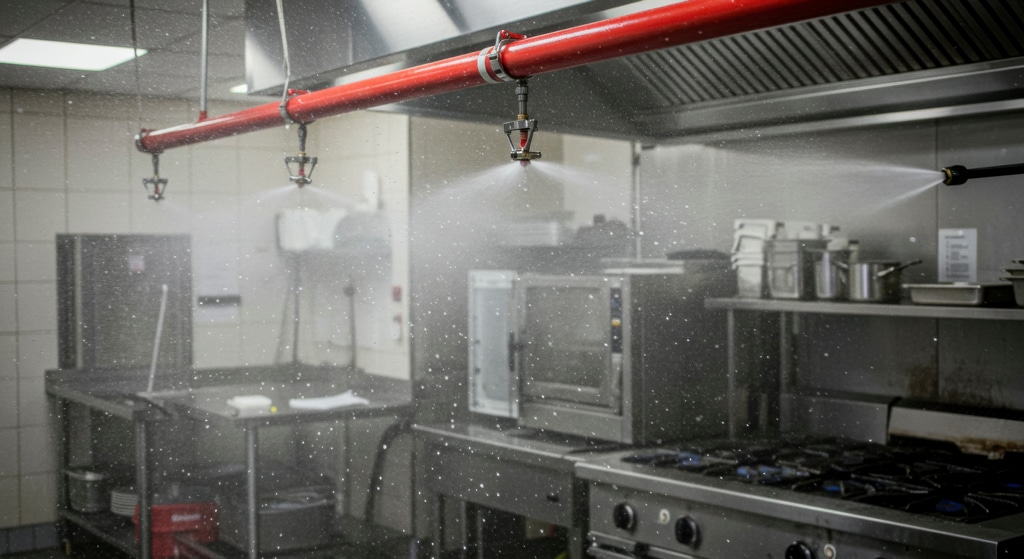
A kitchen fire sprinkler system often becomes relevant at the exact moment nobody expects trouble. A pan stays on the hob a little too long while attention shifts elsewhere. An air fryer runs while someone answers the door and forgets the timer. A toaster heats quietly until internal components overheat without warning. These small everyday moments create the conditions where fire starts quickly. Most homeowners assume they will notice danger in time, yet kitchens behave differently. Fire develops fast and removes reaction time almost immediately. That is where automatic protection changes the outcome entirely.
Why a kitchen fire sprinkler system matters in UK homes
A kitchen fire sprinkler system plays a direct role in reducing fire risk inside modern UK homes. Kitchens now contain more electrical appliances than ever before. Air fryers, induction hobs, coffee machines and ovens all operate daily in busy households. Each appliance increases convenience, yet also introduces another potential ignition point. Most equipment works safely, but faults and misuse still happen across the country. Cooking remains the leading cause of accidental house fires in UK homes.
The National Fire Chiefs Council highlights cooking as the most common ignition source in domestic incidents. That pattern remains consistent across decades of fire service reporting. Modern kitchens combine heat, electricity and flammable materials in a compact space. That combination increases how quickly fire can develop and spread. A kitchen fire sprinkler system responds when heat reaches a critical level. It activates without human input and without delay. That immediate response helps stop a small fire becoming a major incident.
Everyday kitchen risks that lead to fire growth
Most kitchen fires begin with ordinary activity rather than rare equipment failure. A pan left unattended can reach ignition temperature faster than expected. Cooking oil can overheat and ignite within minutes under the right conditions. Even brief distraction creates enough time for fire to start. Once ignition occurs, flames spread quickly across nearby surfaces. Heat then builds and reduces escape time significantly.
Air fryers and similar appliances have increased attention from fire services in recent years. These devices operate at high temperatures for extended periods during use. They remain safe when used correctly, but faults still occur occasionally. Electrical failures or overheating components can create sudden ignition points. Fire and rescue services across the UK have responded to incidents involving these appliances. These cases show that modern technology does not remove risk entirely.
Unattended cooking remains one of the most frequent causes of domestic fire incidents. A phone call or doorbell can interrupt cooking supervision within seconds. That short absence allows oil or food to overheat without control. Fire then develops quickly once ignition begins. A kitchen fire sprinkler system does not rely on awareness or reaction. It responds directly to heat and starts suppression immediately. That speed reduces escalation before fire spreads further.
How a kitchen fire sprinkler system responds to fire
A kitchen fire sprinkler system activates automatically when surrounding air reaches a set temperature. It does not wait for smoke detection or manual activation. Instead, it reacts directly to heat close to the fire source. That response allows it to act earlier than most traditional systems. Early activation plays a key role in limiting fire size and intensity. The faster suppression begins, the lower the damage potential.
Each sprinkler head operates independently within the system. Only the head closest to the heat activates during a fire event. This prevents unnecessary water discharge across the rest of the property. It also focuses suppression directly on the ignition point. Water releases straight onto the fire source and reduces flame growth. That targeted action helps contain fire before it spreads beyond the kitchen.
Modern homes benefit significantly from this early intervention approach. Open-plan layouts allow heat and smoke to travel quickly through living spaces. A small kitchen fire can affect adjacent rooms within minutes. A kitchen fire sprinkler system interrupts that progression at the earliest stage. It also reduces smoke production by controlling fire intensity. That improves visibility and supports safer evacuation routes.
Smoke alarms and sprinklers working together
Smoke alarms remain essential in every UK home for early warning. They alert occupants when smoke develops and encourage rapid evacuation. However, they do not control fire or slow its growth. A kitchen fire sprinkler system provides that active suppression function. One system warns while the other responds. That combination strengthens overall fire protection significantly.
This layered approach becomes especially important during night-time incidents. Occupants may be asleep or slow to react when alarms activate. Reaction time naturally decreases in low awareness situations. A sprinkler system operates independently of human response. It activates as soon as heat levels rise beyond safe limits. That immediate response reduces fire growth before conditions become dangerous.
Escape routes also remain clearer for longer during sprinkler activation. Smoke spreads rapidly in enclosed and open-plan homes. Sprinkler action reduces fire intensity and slows smoke production. That helps maintain visibility during evacuation. It also reduces heat levels in key exit paths. These factors together improve safety during critical moments.
Modern homes and the need for fire suppression
Modern UK homes have changed significantly in layout and materials. Open-plan designs now dominate new builds and renovations. These spaces create light and flexibility for family living. However, they also allow fire and smoke to move more freely. That increases the speed of fire spread within the property.
Modern furnishings often include synthetic materials that produce dense smoke when burning. Engineered flooring and insulation materials also contribute to fire behaviour. These changes increase how quickly conditions become hazardous. A kitchen fire sprinkler system helps manage this risk at an early stage. It limits fire growth before it spreads beyond the kitchen area.
Discreet installation supports modern interior design expectations. Sprinkler heads fit neatly into ceilings without drawing attention. Most remain visually unobtrusive during everyday use. Despite that, they stay fully active at all times. That balance between safety and design suits modern homes well. It allows protection without affecting appearance.
BS 9251 standards and installation quality
A kitchen fire sprinkler system must comply with BS 9251 in the UK. This standard governs domestic and residential sprinkler design. It ensures consistent performance and reliable operation during fire conditions. Compliance also supports insurer and regulatory expectations. That makes professional installation essential for every project.
Each property requires a tailored design based on layout and structure. Water supply, ceiling height and room configuration all influence system planning. A professional installer assesses these factors before design begins. Hydraulic calculations ensure correct water flow during activation. Pipe sizing also supports consistent system performance. These technical steps ensure reliable operation when needed.
Installation is followed by testing and commissioning. This confirms correct system response under controlled conditions. Ongoing servicing maintains long-term reliability and compliance. Regular maintenance ensures the system remains ready for activation. That structured approach supports continuous fire protection.
Final thoughts on kitchen fire sprinkler protection
A kitchen fire sprinkler system provides immediate protection against fast-developing kitchen fires. It responds automatically at the earliest stage of ignition. That early response reduces fire size, smoke production and structural damage. It also improves evacuation safety during emergencies. Combined with smoke alarms, it creates a stronger overall safety system.
Modern homes face faster fire spread due to layout and material choices. That makes early suppression more important than ever before. A professionally installed system controls fire before it spreads beyond the kitchen. It also reduces emotional and financial impact after incidents. Fire safety should never depend on reaction time alone.